
What Kind of Duct Should I Use to Vent My Dryer?
If you’re replacing or installing dryer venting, the material you choose matters more in Florida than it does almost anywhere else.
Flexible Foil vs. Rigid Metal
Rigid or semi-rigid metal duct is the safer, better-performing choice — especially here.
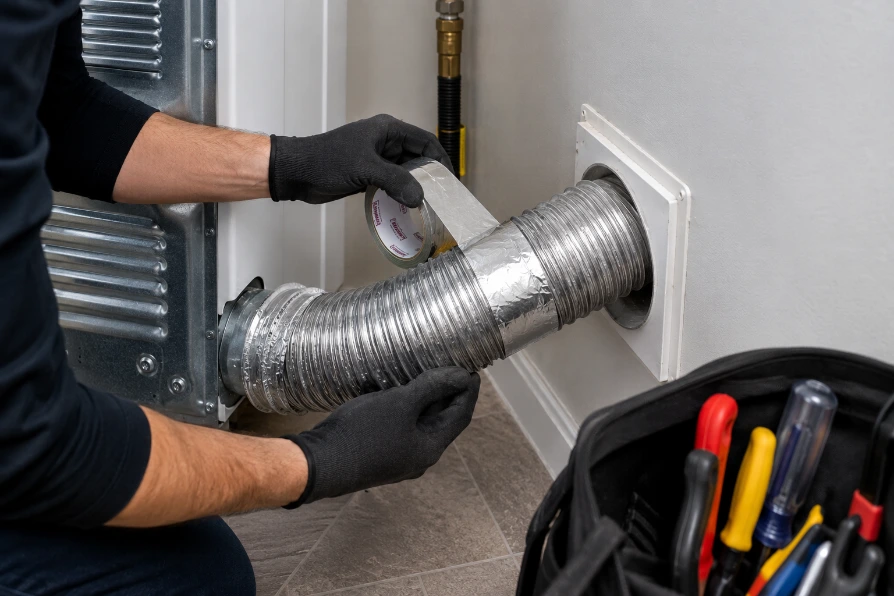
Flexible foil or plastic hose is cheap and easy to install, which is why so many older homes still have it. The problem is every ridge and fold in a flexible hose is a place lint can catch and build up, instead of sliding smoothly through toward the exit. Rigid or semi-rigid metal duct has a smooth interior that lint moves through much more easily, and it holds up to heat and time far better than flexible hose does.
Florida Code Notes
Most current Florida building code guidance favors rigid or semi-rigid metal duct for exactly this reason, and some jurisdictions restrict or prohibit flexible plastic venting outright, particularly for new installations. If you’re not sure what your local code requires, that’s worth confirming before a repair or installation rather than after.
Why Humidity Changes the Answer
In a drier climate, flexible hose’s lint-trapping tendency is a nuisance that shows up as more frequent cleanings. In St. Augustine’s humidity, that trapped lint absorbs moisture from the air and mats together, which narrows airflow faster and raises both fire risk and mold risk at the same time. It’s one of the clearer examples of how our local climate changes what “good enough” actually means for home maintenance.
Frequently Asked Questions
Is flexible dryer vent hose unsafe?+
It’s not automatically unsafe, but it traps lint more easily and isn’t the current recommended standard.
What’s the best material for a dryer vent in Florida?+
Rigid or semi-rigid metal duct, mainly because of how our humidity affects lint buildup.
Do I need to replace flexible venting if my home already has it?+
Not always immediately, but it’s worth discussing with a technician during your next visit.
Does Florida code require a specific vent material?+
Most current guidance favors rigid or semi-rigid metal — check your local jurisdiction to confirm.
Ask Us About Your Vent Material
Not sure what’s behind your wall? We’ll check it during any visit.
Call (904) 937-8383