
Florida Humidity and Dryer Vent Mold: What Homeowners Should Know
Most dryer vent content out there is written for a national audience and skips over exactly the thing that makes this a bigger issue here than it is in a lot of the country: our humidity.
How Humidity Changes Lint Behavior
Humid air makes lint absorb moisture and pack together instead of staying loose enough to blow out easily.
In a dry climate, lint tends to stay light and dry as it moves through a vent line, which makes it easier to clear both on its own and during a cleaning. St. Augustine’s humid subtropical climate works against that — lint pulls moisture straight out of the air around it, mats together, and clings to the interior of the duct more stubbornly. That’s part of why we don’t recommend stretching cleaning intervals much past a year here, even for lighter-use households.

Where Mold Risk Comes In
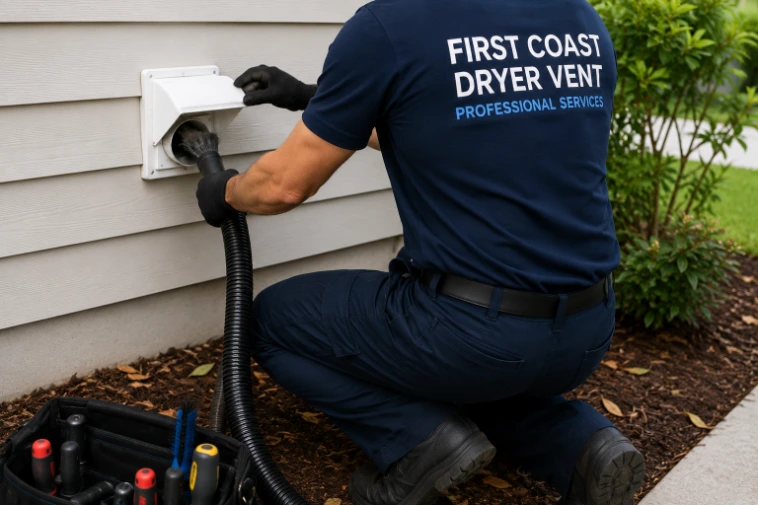
Damp, matted lint sitting inside a duct for months at a time is close to ideal conditions for mold growth — dark, humid, and full of organic material. This isn’t just a theoretical risk; a restricted vent line traps moisture from every single drying cycle instead of letting it escape outside the way it’s designed to, and that trapped moisture has to go somewhere. In some cases, that mold growth extends back toward the dryer itself or into a nearby closet or laundry room wall cavity.
Signs of Moisture or Mold in Your Vent System
A musty smell in the laundry room that doesn’t go away with normal cleaning, visible dark spots or discoloration around the vent connection, or a lint screen that feels consistently damp rather than just dusty are all worth paying attention to. None of these are things a homeowner should try to resolve with a can of bleach spray — they call for a proper inspection of the actual vent line.
Frequently Asked Questions
Does Florida’s humidity really make dryer vents worse?+
Yes, humid air makes lint absorb moisture and pack down faster than in a drier climate.
Can a clogged dryer vent actually cause mold?+
Yes, trapped moisture from restricted airflow creates conditions mold can grow in.
What should I do if I notice a musty smell near my dryer?+
Get the vent line inspected rather than just treating the smell with cleaning products.
Does this mean I need cleaning more than once a year in Florida?+
For many households, yes, especially with pets, heavy use, or a long vent run.
Book an Inspection for Moisture Concerns
Noticed a musty smell or damp lint screen? Let’s take a real look.
Call (904) 937-8383