
Dryer Vent Cleaning for Vacation Rentals & Airbnb Hosts
If you own or manage a short-term rental, your dryer never really gets a break — guest after guest, with nobody there full-time to notice a problem. We built for that.
Why Rental Properties Need More Frequent Service
Constant turnover means constant use — and faster lint buildup. A dryer in a full-time family home might run once or twice a day. A dryer in an active short-term rental can run several loads back-to-back between every checkout, especially during peak season. That kind of use adds up fast, and it means a rental property’s vent can need cleaning twice a year instead of once, even though the home itself might be smaller than your average single-family house.
The Regulatory Reality Behind This Service
Running a short-term rental in St. Johns County comes with real compliance obligations most owner-occupants never have to think about — and fire safety sits at the center of them.
Florida requires a DBPR license for any property rented more than three times a year, plus local registration and Tourist Development Tax compliance. Properties also have to meet Florida’s vacation rental safety standards, including functioning smoke detectors and fire extinguishers. Inside St. Augustine city limits, hosts face additional requirements: annual city registration, a 24/7 local contact with a one-hour response window, and displayed property ID numbers.
A dryer vent fire isn’t just a safety issue in this context — it’s a compliance and liability issue. Standard homeowners insurance typically does not cover short-term rental properties once you start accepting paying guests; insurers can invoke a “business activity exclusion” and deny claims — including fire claims — on a property being used as a nightly rental. Specialized short-term rental insurance closes that gap, but it doesn’t eliminate the underlying risk. This is why we treat vent cleaning frequency for active rentals as a real risk-management decision — twice a year isn’t us upselling, it’s matched to how much more these dryers actually run.
Our Process for Rental Properties
- 1
Turnover-window scheduling. We confirm your typical guest turnover window (same-day, next-day, or longer) and schedule the visit to fit inside it, so cleaning never costs you a booking or disrupts a stay.
- 2
Full duct inspection, not just a cleaning. Given the elevated usage rental dryers see, we check the full run for wear, not just lint — heavier use means we’re more likely to catch developing issues before they become an outage during a guest’s stay.
- 3
Full clean of the vent line and exterior termination. Same thorough process as our standard residential service, sized to the higher lint load an active rental typically has.
- 4
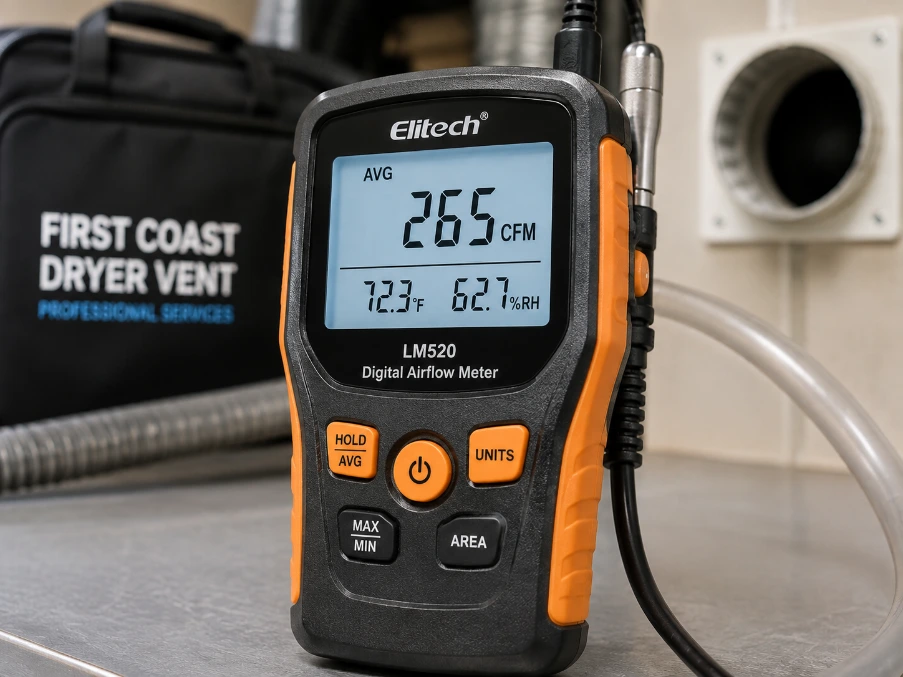
Airflow verification. We test and record actual airflow after cleaning — this reading becomes part of your documentation, giving you an objective baseline to compare against on the next visit.
- 5
Photo documentation. Before/after photos of the vent line and termination point, plus the airflow reading, compiled for your records.
- 6
Report delivery. Documentation is sent directly to you (the owner) or your property manager, whichever you specify, without you needing to be on-site or follow up for it.
Turnover-Window Scheduling & Remote Owner Documentation
We schedule rental property visits during the gap between guest checkout and the next check-in, not during a stay.
Tell us your typical turnover window — same-day, next-day, or a longer gap — and we’ll work the visit into it so cleaning never costs you a booking. A lot of our rental clients don’t live anywhere near St. Augustine. For those owners, we send photo documentation and the airflow reading after every visit, so you know exactly what was done without needing to be there or call your property manager for an update.
How Service Differs by Rental Type
Single-Property Owner-Hosts
Most benefit from twice-yearly service tied to your slower season plus a check before your busiest stretch.
Multi-Property Owners & Managers
If you manage several rental units across the county, we can coordinate a rotating schedule across your portfolio — see our Property Management page.
Whole-Home vs. Condo Rentals
A rental in a multi-unit condo building, common in Vilano Beach and St. Augustine Beach, may need building management coordination for exterior vent access.
High-Density Rental Areas
St. Augustine Beach and the historic downtown core have some of the highest concentrations of short-term rentals in the county.
Preparing for Peak Season
St. Augustine’s rental market runs hot most of the year, but it spikes hard around Nights of Lights every winter, plus the usual summer travel season. A dryer breakdown mid-stay during peak season doesn’t just cost you a repair — it costs you a guest complaint and often a bad review that sticks around a lot longer than the inconvenience did. Booking a cleaning ahead of your busiest stretch is cheap insurance against that.
What Rental Property Service Typically Costs
Rental property pricing follows the same fundamentals as our standard residential service — run length, access, and complexity — with two rental-specific factors layered on: visit frequency (typically twice yearly for active properties, which we can bundle at a better combined rate than two standalone visits) and documentation (photo/airflow reporting is included at no extra charge for rental clients). Multi-property owners and property managers get portfolio-level scheduling and pricing — ask about this when booking your first property with us.
Frequently Asked Questions
How often should a vacation rental’s dryer vent be cleaned?+
Twice a year is common for active rentals, versus once a year for a typical home.
Can you schedule around guest turnover?+
Yes — tell us your typical turnover window and we’ll fit the visit inside it so it never costs you a booking.
Do you send documentation for remote owners?+
Yes — photo documentation and an airflow reading after every visit, sent directly to you or your property manager.
What happens if a dryer breaks down during a guest stay?+
We prioritize rental service calls given the direct impact on your booking and reviews — call us and we’ll work to get you seen as quickly as possible.
Does my homeowners insurance cover a dryer fire in my rental property?+
Possibly not. Standard homeowners policies frequently exclude business-use activity, which can include short-term rental use — meaning a fire claim could be denied even if the fire had nothing to do with your guests. Most hosts need specialized short-term rental insurance; this is a question for your insurance provider, but it’s part of why we take vent maintenance seriously for rental clients specifically.
Do I need to register my rental with the county, and does that affect vent cleaning requirements?+
St. Johns County and, if you’re within city limits, St. Augustine both have registration and safety compliance requirements for short-term rentals, including functioning smoke detectors and fire safety equipment. We’re not your compliance authority, but keeping dryer vents clear is a meaningful part of the fire-safety picture regulators and insurers care about.
I manage multiple rental properties — can you handle all of them on one schedule?+
Yes — see our Property Management page for portfolio-level scheduling. We can coordinate visits across multiple properties so you’re not booking each one separately.
My rental is in a condo building — do you need building management approval?+
Often, yes, if exterior vent access requires common-area or roof coordination — this is common in multi-unit buildings in Vilano Beach and St. Augustine Beach. Let us know your building when booking and we’ll handle that coordination as part of scheduling.
Book Rental Property Service
Scheduled around your turnover window, with documentation for remote owners.
Call (904) 937-8383