
Dryer Vent Repair & Installation
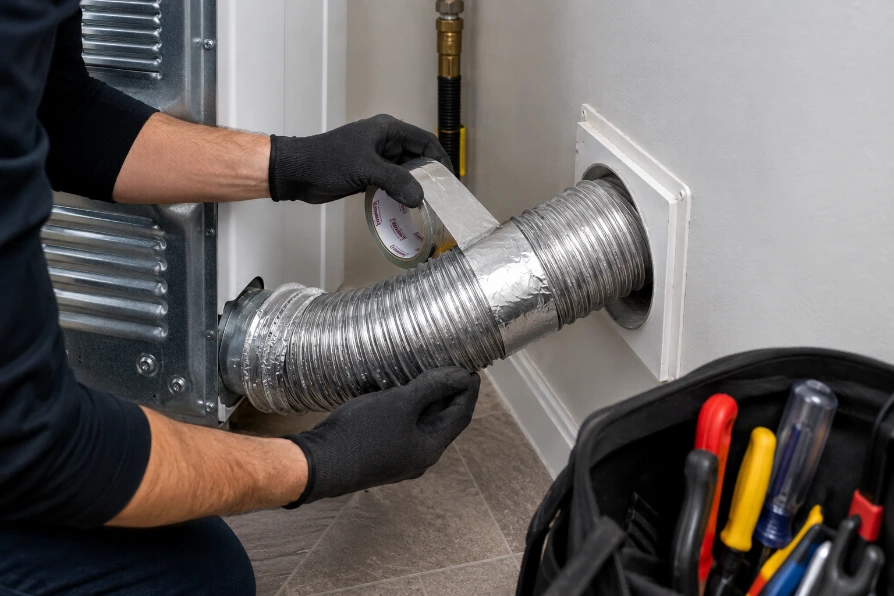
A cleaning fixes a clogged vent. It doesn’t fix a crushed section, a disconnected joint, or a vent installed wrong from the start. That’s a different job — we do that one too.
What We See Most
Crushed sections, disconnected joints, and damaged exterior hoods are what we see most. A vent hose gets crushed when furniture or a renovation pushes against it, a joint comes apart when a dryer gets moved and reconnected without being checked, and exterior hoods crack or corrode over time, especially near the coast. Any of these can look like a clog from the symptoms alone — slow drying, a burning smell — but no amount of cleaning fixes a physical break in the line.
Why It’s Not Just a Preference
Florida building code requires dryer exhaust ducting to be rigid metal — typically 28-gauge galvanized steel at a 4-inch nominal diameter — for the main run.
A single flexible transition duct connecting the dryer itself to the rigid run is allowed, but only up to 8 feet. This isn’t an arbitrary preference; it’s driven by three real safety factors: fire resistance (rigid metal doesn’t burn; flexible vinyl or foil duct offers essentially no fire resistance if lint ignites inside it), lint accumulation (rigid duct has a smooth interior that lint moves through cleanly, while flexible duct has a ribbed interior that snags lint and accelerates dangerous buildup), and structural integrity (rigid metal resists crushing; flexible duct crushes and kinks easily, creating sudden airflow blockage exactly where you can’t see it).
If your home has flexible venting beyond the allowed 8-foot transition — common in older homes and in DIY dryer relocations we see after unpermitted remodels — that’s a repair conversation, not just a cleaning conversation, and we’ll walk you through why.
Run Length and When a Booster Fan Actually Makes Sense
Code generally allows a maximum developed duct length of 35 feet from the dryer connection to the exterior termination — but bends count against that limit. Each 90-degree elbow adds the equivalent of 5 feet to your total developed length; each 45-degree elbow adds about 2.5 feet. A run that looks like “only 28 feet of straight duct” can easily exceed the 35-foot maximum once you add three 90-degree bends (28 + 15 = 43 feet developed length) — which is a common situation in additions, remodeled laundry rooms, and multi-story homes with roof termination. When a run genuinely can’t be shortened — a structural constraint, a remodel that relocated the laundry room permanently, a multi-story home where the roof is the only practical termination — a listed booster fan, installed by a licensed electrician and rated for dryer exhaust, can extend the allowable length. But a booster fan is an exception, not a first choice: it adds a component that itself requires maintenance and inspection, and re-routing to a shorter, code-compliant run is generally the better long-term fix when construction allows it. We’ll tell you honestly which situation you’re in rather than defaulting to whichever repair is more profitable for us.
New Construction Installation
If you’re building or doing a major remodel, we install dryer venting to current code from the start.
The right material, the shortest reasonable run, and a termination point that won’t cause problems down the line. Getting this right during construction saves a lot of headache later, since a poorly planned vent run baked into a new build is much harder to fix once the walls are closed up.
Vent Re-Routing After a Remodel
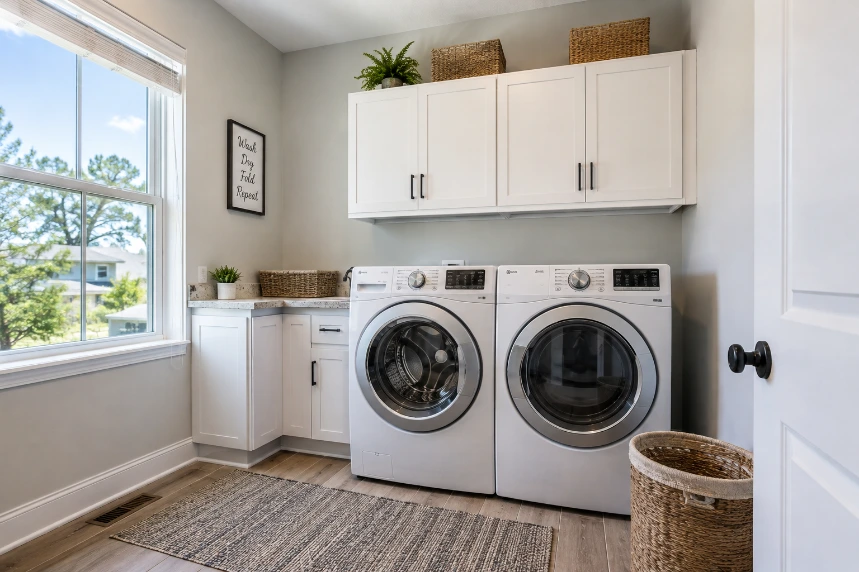
Kitchen and laundry room remodels are one of the most common reasons a home ends up with an awkward, overly long vent run — the appliance moved, but nobody thought through the venting implications until later. We can re-route an existing line to something shorter and more efficient, which sometimes solves a recurring lint problem better than repeated cleanings ever could.
Segmentation by Situation
New Construction & Major Remodels
We install to current code from the ground up — material, run length, and termination planned before walls close, which is dramatically cheaper than fixing a bad run after the fact.
Post-Remodel Re-Routing
A laundry room or kitchen that moved during a remodel but kept the old vent path (or got a hastily extended one) is one of our most common repair calls.
Historic-District Homes With Retrofit Ductwork
Given how many downtown St. Augustine homes had venting added decades after original construction, repair here often means bringing a genuinely old, sometimes non-code-compliant retrofit up to current material and length standards, not just fixing a single break.
Storm/Renovation Damage
Crushed or disconnected sections from furniture moves, storm-related repairs, or general wear get assessed and fixed as standalone repairs without requiring a full re-route if the rest of the system is sound.
Coastal Properties With Hood/Termination Corrosion
Exterior hood replacement is a common, more contained repair for Vilano Beach, Anastasia Island, and other coastal-area homes where salt air has degraded the termination hardware faster than the duct itself.
Florida Code Requirements
Florida building code has specific requirements around dryer vent material, length, and termination that matter both for safety and for insurance and resale purposes. If your home has flexible plastic venting or a run that’s longer than code typically allows without a booster fan, we’ll flag it and explain your options — not push you into a repair you don’t need.
Repair & Installation Pricing
Repair and installation pricing varies more than cleaning pricing, since the scope itself varies more — a single damaged exterior hood is a small, contained repair; a full re-route after a remodel is a larger job closer to new installation in scope. Rough categories: exterior hood/termination replacement (the smallest, most contained repair category), localized duct repair such as a crushed section or disconnected joint (moderate scope, usually completed same-visit once diagnosed), full re-routing after a remodel or bringing older retrofit ductwork up to code (the largest repair category, priced based on new run length and material needed), and new construction installation (priced as part of your build or remodel scope — we’re happy to work directly with your contractor or builder). We always diagnose and quote before starting repair work — if an inspection reveals the issue is simpler (or more involved) than initially expected, we’ll tell you before doing anything beyond the original scope.
Why This Matters More Than a Quick Patch Job
A lot of handyman-style fixes treat a damaged vent section as a tape-and-patch job rather than a code-compliance question. That’s a real problem in Florida specifically, where the code requirements around material and run length exist because flexible venting and overlong runs are measurably more dangerous in a state with our humidity and fire-risk profile. We diagnose repairs against the actual Florida code standard, not just “does it look fixed,” which matters both for your safety and for resale — an inspector or appraiser who finds non-compliant venting during a future sale is a problem you can avoid now.
Frequently Asked Questions
How do I know if I need a repair instead of just a cleaning?+
If cleaning doesn’t resolve the issue, or you can see physical damage to the line, repair is likely needed.
Can you install dryer venting during a remodel?+
Yes — we work directly with your contractor or builder to plan the vent run before walls close, which is far easier and cheaper than fixing it afterward.
Is my vent up to current Florida code?+
We can assess this during any visit — key things we check are material (rigid metal required for the main run, flexible transition limited to 8 feet), total developed length (35-foot code maximum, with bends counted against it), and termination compliance.
Do you repair damaged exterior vent hoods?+
Yes — this is one of our most common, most contained repairs, especially on coastal properties where salt air accelerates hood corrosion.
My duct is flexible, not rigid metal — is that automatically a violation?+
Not automatically — a flexible transition duct up to 8 feet connecting the dryer to the main rigid run is allowed by code. Flexible ducting used for the full run, or exceeding that 8-foot transition limit, is what we’d flag as needing correction.
What’s a “developed length” and why does it matter more than just the straight-line distance?+
Developed length accounts for bends, not just straight footage — each 90-degree elbow adds roughly 5 feet to your effective total, each 45-degree elbow about 2.5 feet. A run that looks short in a straight line can still exceed the 35-foot code maximum once its actual bends are counted.
Do I need a booster fan?+
Only if your run genuinely can’t be shortened to fit within code length after accounting for bends. We generally recommend re-routing to a compliant length when that’s structurally possible, and reserve booster fans for situations where it isn’t — we’ll walk you through which situation applies to your home.
Will fixing my vent affect my home’s resale value or inspection?+
It can help avoid a problem — non-compliant venting (wrong material, excessive length, damaged termination) is something a home inspector may flag during a sale. Getting it corrected proactively, with documentation of the work, is generally easier than dealing with it as a closing contingency.
Book Repair or Installation
Diagnosed and quoted against actual Florida code, not a guess.
Call (904) 937-8383