
Long or Complex Dryer Vent Runs: When a Kit Won’t Cut It
Some vent runs are simple. Others wind through additions, converted attics, or a slab foundation before ever reaching outside. Here’s how to tell which one you have.
What Makes a Run “Complex”
Length past 25 feet, multiple bends, or a route through an attic, slab, or crawlspace all count as complex.
A straightforward run is short and mostly straight — dryer to exterior wall, done. A complex run might travel through a converted attic space in a historic downtown home, drop through a wall cavity added during a remodel, or route underneath a slab foundation, which we occasionally see in older single-story homes around St. Augustine. Every one of these adds distance and turns, and every turn is a spot where lint likes to collect.

Why Historic Homes Are Especially Prone to This
Dryers didn’t exist when most of downtown St. Augustine’s oldest homes were built, so venting always got added after the fact — sometimes well after, during a renovation decades later. That means the vent run often follows whatever path was easiest to retrofit rather than the shortest, cleanest route an architect would choose starting from scratch. It’s not a flaw in these homes, just a reality of how old housing stock gets updated over time.
Why DIY Tools Struggle Here
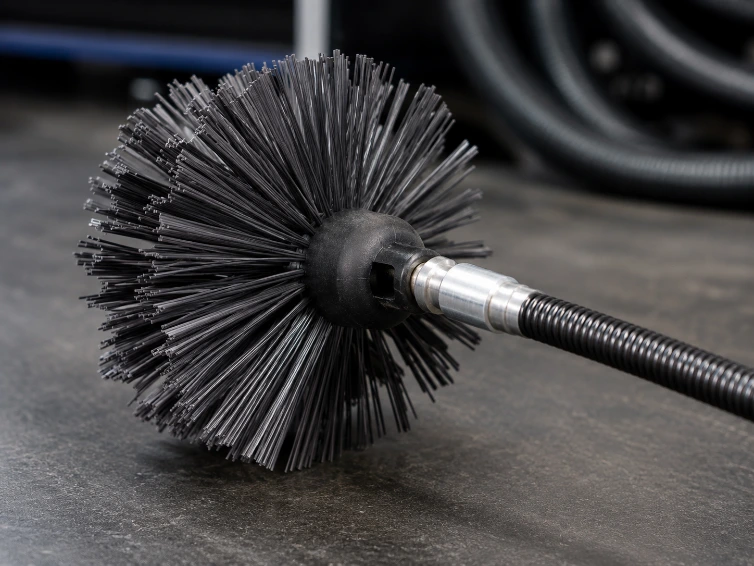
Most consumer cleaning kits max out around 12 to 30 feet of usable reach, and that’s before bends start eating into it. A flexible brush rod that can push through a straight 20-foot run might only effectively clear 10 or 12 feet of a run with three tight turns. Push it too hard and you risk damaging the vent hose or just packing lint tighter instead of pulling it out.
What Professional Service Looks Like for These Setups
For a long or complex run, we use extraction equipment built for exactly this kind of distance and routing — negative-pressure vacuum extraction paired with a rotary brush system that can navigate bends a rigid or short flexible kit simply can’t reach. If a run is unusually difficult, we’ll walk you through what we’re seeing and, in some cases, discuss whether a re-route during a future remodel would solve the underlying problem rather than just treating the symptom every year.

Frequently Asked Questions
What counts as a “complex” dryer vent run?+
Runs longer than 25 feet, with multiple bends, or routed through an attic, slab, or crawlspace.
Why do historic homes often have complex vent runs?+
Venting was added after original construction, often following whatever path was easiest to retrofit.
Can a DIY kit handle a complex run?+
Usually not fully — most kits run out of effective reach well before a complex run’s actual length.
Is a vent re-route ever worth considering?+
Yes, for chronically difficult runs, shortening the path during a remodel can solve recurring problems.
Book Service for a Difficult Vent Run
We bring the equipment built for distance and tight bends.
Call (904) 937-8383